Sunday, May 17, 2015

Evaluating IFRS Plans for Global Standardization

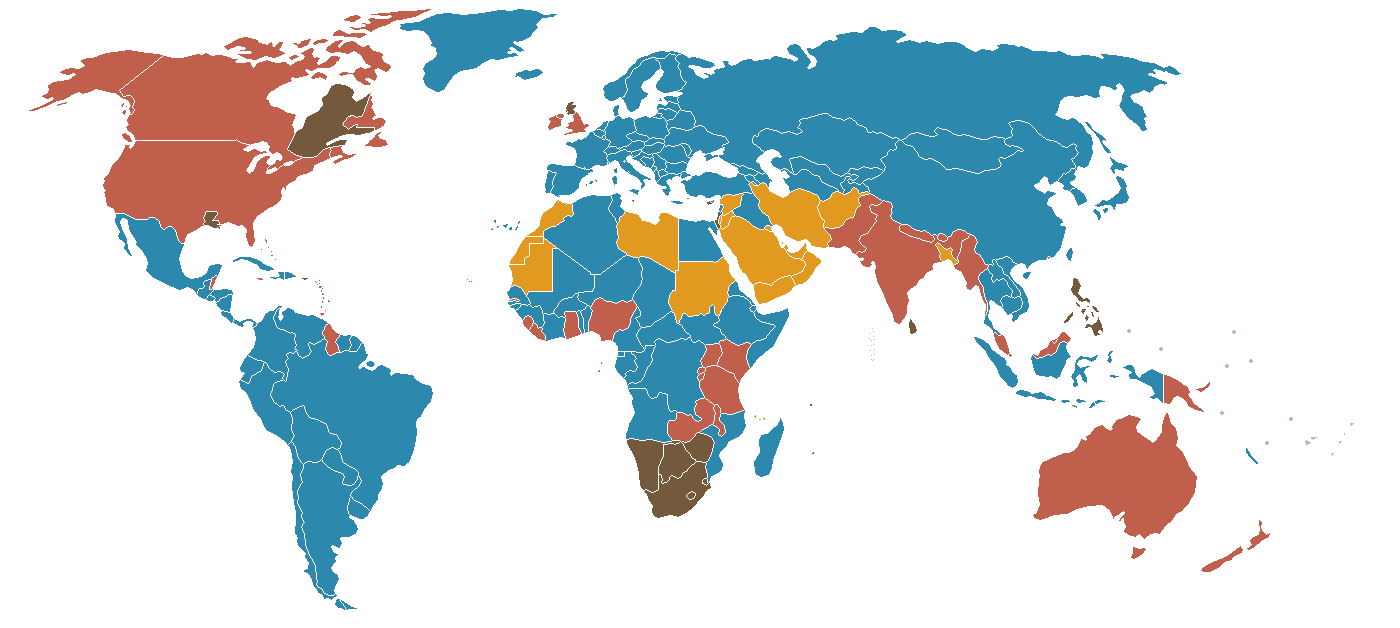
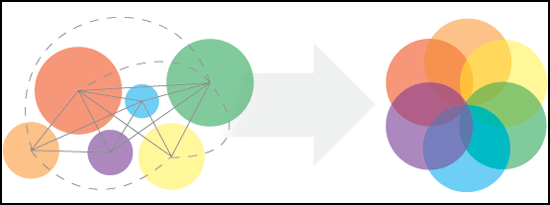
The long-run goal of the IFRS is to standardize accounting practice across the countries of the world. According to IFRS , their objective is "to develop a single set of high quality, understandable, enforceable and globally accepted financial reporting standards based upon clearly articulated principles" (IFRS, 2015). This is based on the one-size fits all principle and rigidity that standardization of accounting practice embodies. Harmonization on the other hand, seeks to set limits on how large the accounting practices between countries may vary in order to accommodate the national influences that shape each nations accounting process.

Harmonization of accounting standards may support a reduction in information asymmetry that international investors typically face, better analyst forecast and coverage (Pae et al 2007), an increase in capital flows, global comparability of financial statements and improved transparency leading to reduced cost of capital globally (Barth et al 2009). However, this does not come without huge implementation costs, rent extraction activities (Hope et al 2006) and loss of diversity in domestic accounting shaped by value dimensions.


The interrelation of the four value dimensions, shapes the differences in culture, religion, business ownership and financing systems that influence the information needs of investors in countries and hence the differences in accounting practices adopted (Deegan, 2000). The four value dimensions considered are power distance (equality vs inequality), gender equality(masculinity vs feminity), uncertainty avoidance (risk adverse or risk loving) and social integration (individuality vs collectivism) (Hosfsede, 1983). This was adopted into accounting research by Gray (1988) into four similar value system's professionalism versus statutory control, uniformity versus flexibility, conservatism versus optimism and secrecy versus transparency. The value dimensions are particularly effective in highlighting why certain accounting methods would be chosen over others in different countries (Ball and Brown, 1968)

These value dimensions translate into barriers to harmonization. A main barrier to harmonization of accounting standards are the differences in the taxation system between Anglo-American nations and Continental Europe nations, for example, in Germany companies are influenced by the principle of Massgeblichkeit which dictates that taxable income is the main purpose of accounting, meanwhile the United States and the UK have no similar principle this leads to significant differences in accounting for profits (Nobes, 2006). Another main barrier is differences in the political and legal system, countries can be categorized into Roman law countries and Common law countries. Roman law countries (Germany, France) are dominated by accounting practices based on government-run accounting regulations and codified laws while, common law countries (US, UK) emphasize the concepts of "reasonable man" and "true and fair value" with limited amount of government control (Pagell, 1994). Furthermore, differences in economic system affect the possibility of true harmonization, for example the US reporting entities usually become public traded companies in order to raise capital,  whereas German entities, mostly derive funding from banks, family and government, as a result accounting information tends to be of a nature to protect the interest of creditors and differs from US accounting information which tends to protect the interest of institutional and individual investors (Deegan, 2000).


Unlinked to value dimensions, but equally important are the varying implementation and enforcement of the standards that occur across countries that adopt IFRS. The IASB is a standard setter and does not have an enforcement mechanism for its standards. This leads to developing countries such as Nigeria with lax accounting, low liquidity, insider dealings and share price manipulation (Pagell, 1994) adopting IFRS, in name, due to the reputation attached to IFRS while failing to fully implement the standards. This leads to countries with developed accounting standards such as the US GAAP questioning the value of global standardization, such doubts are further compounded by the uncertainty of IASB's future financial stability.


IFRS must first adopt the appearance of harmonization before the transition to reach global standardization of accounting practices.The possibility of international harmonization is constrained on the standards set being flexible and favorable to those regulated, however this reduces the possiblity of realizing the benefits of harmanization. For example, IFRS 7 designed to improve the transparency of off balance sheet securitisations and similar transfer transaction (IFRS, 2015) has proved to be quite lax in enhancing comparability between firms that employ window dressing and offsetting of derivative contract tactics to those that do not. Given the highly political nature of IFRS and the private economic interest of western countries in play,  adopters should be skeptical about the promises of high quality standards under the IFRS conceptual framework.
Thursday, May 7, 2015

Layers of Anger with British Academia

River drown them! River drown them! River drown them! I would donate my liver and three kidneys to wake up to the news that my chosen academic institution is drowning in a vicious, icy river. A river as wide as the Amazon, as long as the Nile and as cold as the heart of Neretva. Let the river take them, river drown them. I am not just mad because the three thousand word literature review I spent most of my easter break writing has been deemed equivalent to the toilet paper I used to wipe my ass this morning. Although, the realization that I would have to read and synthesis an extra hundred body of work to create a new literature review is truly heartbreaking. This post is actually the explosion of multiple layers of anger that has been boiling up inside of me since the start of my master's degree. A lot of this would have easily been avoided if I was well aware of it. How can you be angry if you already knew right? I did work hard to fully prepared myself , reading as many 'International student guide to study in the UK' as humanly possible. Even so, while attending a single university which is clearly unrepresentative of all UK schools experiencing the British education system,  I realized that a number of my personal issues with the system were left out. Why didn't everyone warn me ahead of time, someone, anyone!

Layer One of Anger: Seminars I am still not quite sure why seminars exist. They seem like a good idea. You know the focus on sharing knowledge, small-group teachings and enhancing discussions among peers.  Reality is a much more different scenario.  I've had seminars where all the tutor did was write down the answers to the recommended homework on the white boardSome professors too lazy to participate in seminars leave students to do meaningless presentations. Basically, not every course needs to have a seminar and those that fall under that category turn out to be the biggest waste of time during the academic year. Let the river take them, river drown them

Layer Two of Anger: Time Management  Let it be known, that once you chose your area of study. You would have no control over your time. Your waking hour would be dictated to you, your schedule of classes for the semester is set on stone and the course load for each trimester has been designed without you in mind. This might not seem problematic until you realize the course schedule planner has some sort of unexplainable, supernatural expectations for students. Two essential superpowers you are expected to have are the power of teleportation and energy regeneration. You would have classes that end at a particular time  (say 2pm) and yet another class that starts at the exact same time, while being a running distance of 15 minutes apart. Also, may the force be with you , if not you will have back-to-back classes from 9am until 6pm, yes, no food break and not even the essential life break that you just want to spend looking at the clouds and people watching. Let the river take them, river drown them.

How I felt after I got my first schedule

Layer Three of Anger: Syllabus The purpose of a syllabus is to set forth what is expected to happen in the course in particular deviations from the typical course structure. British system kind of finds it unnecessary for you to have an idea of the course rules and your responsibilities.  One can only assume that an assignment handed out it the second trimester would be assessed by the end of the second semester and grades received before the start of the final trimester. It is written in the first few pages of the unofficial guide to commonsensical academic institution protocol. Somewhere along the line, our professors lecturers see it fitting to return a second semester grades only a few days before graduation. Psshhh full disclosure, like it matters right ? Furthermore, you would have lecturers refusing to communicate important deadlines and  assignment topics until the very last minute and the very last lecture.  Let the river take themriver drown them

There you have it, now let me get back to studying for my finals.


What I'm listening to
River-Ibeyi

Monday, January 19, 2015

When Costing is not as easy as ABC

Costs are expensive. But what is even more expensive and unnecessary is the inability to accurately measure and represent your costs. The misrepresentation of actual cost is greatly influenced by the allocation of overhead. When an organization finds it very expensive or impossible to convert overheads to direct cost. They may be forced to make a decision between the traditional costing methods (TCM)and activity-based costing (ABC) methods of cost allocation.

According to Kaplan, The use of TCM would be more practical with the organizations that were running decades ago, where companies manufactured a narrow range of products, so their cost's were easily traceable and a grossly misrepresented overhead had very little impact on the final, total cost of operations .  As today's organization have expanded, the proportion of indirect cost far exceeded direct costs therefore, it is no longer justifiable to use TCM as a method of allocating overheads , especially as the cost of information technology has decreased and the global market competitiveness has intensified.

The first and vital step to enforcing an effective ABC system is accuracy. While very similar to TCM, ABC endeavors to allocate overheads more proportionally to cost objects, based on activities required, cost drivers for these activities and resources demands for each cost object. ABC is however difficult to implement and not effective in large-scale operations or operations with many resources of equal per unit cost as the cost of implementation usually by far exceeds the reward. In such a scenario, it would be usually more effective to implement traditional costing methods.

Review of the Balanced Scorecard

The balance scorecard, pioneered by Robert S. Kaplan of Harvard Business School, is a form of report-based performance measurement that focuses on four perspectives namely financial, customers, internal process and knowledge and growth. It was brought upon by the rising critic of the use strictly financial measures to evaluate and run processes in the majority of traditional organizations.

The proposition of the balance scorecard entails that an organization would reach its goals as long as the four essential perspectives are optimized. The financial perspective focuses on the financial goals of the organization ,the customer perspective focuses on the market for the organizations commodities, the internal processes focus on the operational aspects of the organization and the knowledge and growth perspective focuses on improvements within the organization.

For each perspective, the organization would have to would have to define its corresponding objective , measure, targets and initiatives. For example,within the financial perspective an exemplary objective could be to increase shareholder's wealth, a measure could be earnings-per-share(EPS), and target could be to increase EPS by 20% and the initiatives could be to increase net income or buy-back shares.

It is important to clearly define objectives with measures that are as directly linked to the objective as possible and targets that are realistic and achievable. It is also important that the measures chosen does not simply correlate with the desired objective but can be casually connected. Scenarios in which these are not carefully considered can seriously undermine the benefits of the balance scorecard to the point of absolute irrelevance. Therefore, more time and effort should be spent in realizing the link between each card than just merely establishing goals.

The balance scorecard like most performance measures is not a 'one size fits all' tool. Therefore, organizations should always customize their balance scorecard with careful consideration of its limitation. For example, the balance scorecard template assumes equal importance of the four perspective, however, organizations would find that certain perspectives supersede all other perspective at varying degrees depending on the time period and holistic goals of the organizations. Some organizations may find that an additional perspective ,such as the 'Social and Environmental' perspective in the case of Tesco,plc, is a necessary introduction to their balance scorecard and that some perspectives are not important to the advancement of the organization, such as the 'Financial perspective' to a typical non-governmental organization(NGO).

I , personally, feel that the balance scorecard is a bit too generic for the dynamic, fast-paced environment that most organizations today operate in. However, it should not be ignored as it has been proven functional in a number of organizations.

Saturday, January 17, 2015

Implications of De Beers' Transfer Pricing Strategy

In the global market today, several key elements of an organisation's processes such as services , intermediate products and finished goods are constantly moved across one or more of its subunits and subsidiaries. The negotiation and establishment of the price of the transaction is known as transfer pricing . The process has historically and mostly been used as one of the many methods that companies' 'cheat the system' by taking advantage of lower tax rates in their subsidiary's geographical location, thereby increasing balance sheet profits. In this article, I explore how De Beer's used transfer pricing conjointly with volume manipulation, strategic marketing and anti-competitive practices to increase future profits.


In an effort to control prices buy manipulating supply De Beers created distribution arms through "The Diamond Syndicate," including "The Diamond Trading Company" in London and "The Syndicate" in Israel. The polished diamond market is a free, competitive market with multiple sellers and buyers. Economic factors such as economic growth rates in consuming nations, employment, disposable income and foreign currency rates have a much greater influence on polished diamond prices than does the DTC.The major difference between rough and polished diamond prices is that the latter are more dependent on supply and demand. If the demand is high and supply is limited, buyers will be forced to purchase rough diamonds to generate new supplies of polished stones. (Department of Mineral Resources 2012:27).


The De Beers group opposed all cutting of diamonds in Namibia and structured itself to avoid tax and move minerals though a worldwide web of companies each of which added costs and subtracted profits in order to maximise De Beers returns abroad. The company had so effectively colonised the government mining department supposedly responsible for regulating it, that the top government mining officials didn't even know the name, never mind the detailed terms of the law they were supposed to enforce. This put De Beers in prime position to abuse the mine, overexploit the diamonds by grade and stone size for many years while the cartel's friends in politics in Britain, America and South Africa delayed independence for Africa's last colony. In this way De Beers shortened the life of the mine and took away an extra billion pounds worth of diamonds ahead of Namibian independence. With working costs at 25% of revenue this means that the company plundered £750 million in excess profit and unjust enrichment from a poor country heading for independence.


In order for corporations to avoid legal consequences and prosecution from illegal transfer pricing, such as for tax evasion purposes, corporations would often have to verify that the transaction was an 'arms-length transaction'. This means that they would have to provide substantial evidence to prove that the set prices would remain the same had the transaction involved unrelated entities. The inability of De Beers group to provide such evidence, in addition to other legal issues has led to the decline of the company's role in the supply of the rough diamond market due to several sanctions and requirement imposed on the company.


*Note: This is study material for my upcoming exam in my master's program, proper citation and referencing would be provided as soon as my availability permits.

Academic Defeat


I'm feeling so defeated by school right now. The other day, I had an exam that I did really badly in and it multiplied my exhaustion with school by a number so large I cannot conceptualize. I spent the rest of the day just upset and mad about how terribly the exam went. 
I'm currently three months into a one-year masters program and  I am at the very end of my interest in academics and being a student to any academic institution, at this point in my life. The main reason for that is the COST of academia. Academia, why you so expensive ? WHY ??!!

The rising prices of tuition fee is just half of it. I am mostly perplexed by the amount of time it takes and the opportunities you give up just by being here , for example, I have a lot of plans right now, more than I have ever had at any specific time in my life and I feel like I have to put even the mere thoughts of these plans on hold because I have exams coming up and I have to prepare for that . Being a student ,basically, means that you give your undervalued life to an organization, adhere to random code of conducts framed loosely around the pretence of education and throw everything you have and you could have, all for a very miniscule reward at the end of the road.


But middle class is cool though. Education is great. I am very privileged to be here and I realize the number of people that dream of being in my shoes right now is large and growing. Just knowing that is enough reason for me keep pushing on, no matter how many times I get smacked in the face by academia. For the time being, I have to put my plans on hold  and enjoy this bumpy ride to middle-class, however, once it lands I'd be hopping on a connecting flight to 1%. 

*Note the destination "1%" in this post does not necessarily relate to the group of people at the top 1% of the wealth scale, although that of course would be nice, very nice.