Wednesday, June 3, 2015

The Failures of SEC and FASB

In the US, the legal and regulatory framework ensuring the reliability of accounting information has been around since the establishment of the AICPA and its predecessors dating back to 1887. The AICPA committee began by formally establishing accountancy in the United States as a profession through educational requirements, a code of professional ethics, licensing status and, most importantly, setting generally accepted accounting principles for financial statement accounting. 


Until the 1970s, the AICPA held a virtual monopoly in this field. In the 1970s, however, it transferred its responsibility for setting generally accepted accounting principles (GAAP) to the newly formed Financial Accounting Standards Board (FASB). Though widely used, the lack of enforcement of AICPA was deemed to be it's major drawback,  as the Wall Street Crash has been attributed to wide-spread accounting fraud, insufficient disclosures and false information. This lead to the creation of the SEC in 1933. 

The goal of the SEC in financial accounting was to ensure improved disclosure and protect investors. However, with the collapse of Enron and WorldCom,  the legal framework faced intense pressures for redevelopment. This resulted in the passage of the Sarbanes-Oxley law that established increased securities regulation and the Public Company Accounting Oversight Board (PCAOB) to maintain audit independence, enforce compliance and regulate the auditing environment. In response to Arthur Andersen shredding implicating documents, tampering was recorded as a criminal offence and  auditing firms were required to maintain seven years of records relevant to their audits. Furthermore, internal controls were mandated to promote enhanced disclosures of off-balance sheet transactions
and pro-forma figures, such as with the use of SPEs and mark-to-market accounting in Enron , with senior executives taking individual responsibility for the accuracy of financial reports.


The developments in the legal and regulatory frameworks are commendable, however several limitations pose a threat to the effectiveness of the the SEC and FASB. These threats consequently transpire into large-scale accounting fraud, such as the AIG Scandal in 2005, Lehman Brothers Scandal in 2008 and Autonomy Scandal in 2012. The main limitation of the legal system stems from timeliness and adequacy of investigations, insufficient persecution and lax protection for whistleblowers. Though, the SEC budget has doubled since the SOX act was enacted the
investigation process has remained fairly constant, relying primarily on informal inquiry and witness testimonials. 

While tips are vital towards the timely uncovering of  financial statement frauds, the subpar witness protections fails in providing an incentive for compelling witnesses, particularly those not involved in the fraudulent reporting. For example, executives , Timothy Belden and Ken Rice, both involved in the accounting scheme avoided jail time and gained protection for their unethically earned fortune while neutral whistleblower, Sherron Watkins of Enron and Cynthia Cooper of WorldCom, were publicly shamed. Therefore, the SEC should seek to provide adequate compensation and/or protection to whistleblowers or divert the majority of funding towards technical forensic investigation such as data-mining, artificial intelligence and latent semantic indexing. In addition, the benefits derived from fraudulent accounting to the perpetrators, often outweighs the cost. For example, the SEC failed to prosecute Lehman Brothers citing lack of evidence and the CEO of AIG faced no criminal charges with the proceedings focused mainly on negotiating monetary fines. 

The main limitation of the regulatory system stems from the flexibility within GAAP and the effects of politics in the standard-setting process. As a principle-based accounting standard, US GAAP tends to be more susceptible to aggressive reporting decisions, in comparison to rule-based accounting standard. This is evident in the choices in accounting for goodwill, recognition of special purpose entities, treatment of loans and conditions for capitalization that were extensively manipulated by Enron and WorldCom towards the interest of the executives. The interaction of private-interest groups in the accounting standard process also dilutes the true-and-fair notion that FASB frameworks claims to uphold. For example, Enron and its auditor, Arthur Andersen, were given permission to use mark-to-market accounting in 1992 after extensive lobbying efforts.
The SEC and FASB claim to be responsible for protecting investors from mishaps in the capital markets. However, numerous studies and evaluations indicate limited improvements in investor protection particularly with regards to the increase in regulation and compliance cost. The points above provide a non-exhaustive summary of the limitations of the legal and regulatory organizations in the US, further improvements include educating the public about securities markets , warning investors of fraud and stock market scams and limiting the relationship between publicly-traded companies and Wall Street. 

The Financial Number Game: The Enron and Worldcom Story

Creative accounting is the measurement and presentation of the accounts using the flexibility within the rules of standard accounting practices, so that they serve the interests of preparers (Mulford, 2002). Fraudulent accounting , in contrast,  deliberately steps outside of the regulatory framework in order to deceive financial users. (Singleton et al. 2006)  The main features of creating accounting are increasing assets by aggressive capitalization and extended amortization policies , inflating revenues by recognizing premature or fictitious revenue, decreasing liabilities by off-balance sheet financing , decreasing expenses by tax evasion and provision accounting and maximizing operating cash flow. (Jones, 2011).Fraudulent and Creative accounting can be driven by multiple factors for simplicity these drivers may be categorized into three circumstances; pressure, rationalization and opportunity

The Enron and WorldCom story was a story not just of the failure of the accounting firm, but also the traditional gatekeepers: the board, the audit committee, the lawyers, the investment bankers, the rating agencies. (Levitt, 2002). A key feature used by both companies was to be particularly optimistic in their revenue recognition approaches in order to inflate profits. Enron's approach in inflating profits were by recording fictitious sales through use of merchant-model rather than "agent-model" in booking trades and by employing mark-to-market accounting , where current revenues were based on estimates of present value of net future cash flow for volatile contracts (Lambert ,2006). Worldcom's approach for inflating profits were to recognize fictious revenue through corporate unallocated revenue accounts and capitalize long-distance line cost expenses as prepaid capacity.


Enron also inflated revenues through round-trip trading, this is essentially done by transferring an asset to another company through sales while buying back the same asset for about the same price and recognizing the trade as revenue (Bond, 2000). Enron achieved this through establishing special purpose entities  such as JEDI, Chewco and Whitewing these entities were also used to hide debt through off-balance sheet financing, this was also a common approach for other energy and telecommunications company such as AOL, CMS Energy and Duke Energy(Forbes, 2002)


Both companies where pressured by declining profits due to the downturn of the economic climate after the dot-com bubble, huge focus on meeting analyst estimates and unrealistic internal earnings targets from , the CEOs, Bernie Ebbers and Jeffrey Skilling. An SEC Investigation found handwritten notes in Worldcom premises that calculated the difference between “act[ual]” or “MonRev” results and “target” or “need[ed]” numbers, and identified the entries necessary to make up that (SEC,2002).


The opportunity for fraudulent accounting was fostered by the company culture in both firms and the relationship with Arthur Andersen. An auditor upholds principles such as independence, objectivity, integrity and competency , due diligence and professional skepticism.  However, most the principles mentioned above weren’t observed by Arthur Anderson. There were obvious signs of cooking the books in both companies, however, the auditors failed to detect any fraud and issued unqualified audit report for years. The company culture of both Enron and Worldcom were shaped by rewarding high-risk taking, unquestionable compliance with seniority,  subpar emphasis on professional ethics and arbitrary rank-and yank approaches to hiring and firing employees.

Several methods could be adopted to mitigate fraud and the losses as a result of fraud. These primarily includes proper corporate governance, auditor independence and persecution. Some significant measures for corporate governance include confidential hotlines, fraud awareness training, management reviews and data mining. Studies show that 51% of fraud were detected by tips from confidential hotlines. Fraud awareness trainings are particularly effective in establishing the company code of conduct and a suitable company culture. Management reviews are used to assess internal controls , frequency of control override and establish the right tone at the top. Data mining is an effective forensic accounting tool that helps in the early detection of fraud . It includes using trend analysis in susceptible accounts such as accounts payable, latent semantic analysis and address geocoding.

While external auditors have been proven to be rather inefficient in detecting fraud , steps need to be taken to establish standards for external auditor independence and limit conflicts of interest. The Sarbanex-Oxley act , that was introduced after the crackdown of Enron and Worldcom, addresses new auditor approval requirements, audit partner rotation, and auditor reporting requirements. It also restricts auditing companies from providing non-audit services (e.g., consulting) for the same clients (Roebuck,2012).

Finally, the legal process in mitigating financial statement manipulation needs to be strengthened. The benefits of gambling on accounting fraud appear to outweigh the potential costs of being caught for committing this fraud. Fines are deemed by the unscrupulous as a price worth paying in return for much lucrative gains from share price manipulation and fraudulent reporting. (Leng, 2006) This suggests that current U.S. civil and criminal penalties for committing accounting fraud are not strong enough to deter this type of behavior (Wharton, 2002)

A Review of Capital Market Research

Capital market research in accounting is based on the relationship between the capital market and financial statement. CMR emerged in accounting literature during the 1970's. Prior to that majority of accounting literature deemed it futile to expect a fairly presented financial position if the aggregates are represented by varying components such as historical cost, actual value, depreciated historical cost, LIFO (Chambers, 1976) Therefore a lot of researchers at the time were focused on advocating for a paradigm shift from historical cost accounting with replacement cost, realizable value, discounted present value and historical index costing(Hendriksen ,1965) citing pathological cases such as bankruptcies, accounting scandals, takeovers or subsequent asset revaluations.

Balls and Brown (1968) on the other hand deemed it necessary to support accounting theory with empirical research and consideration of selection bias. In their research paper 'An Empirical Evaluation of Accounting Income Numbers' they assessed the information content of accounting disclosure by evaluating the aggregate effect of unexpected earnings on abnormal returns and found that 80-90% of earnings is anticipated by inventors due to multiple sources of  financial information. This indicates that annual accounting numbers are not a particularly timely source of information to the capital markets. This research strongly relies on the semi-strong form of market efficiency which asserts that the market reacts swiftly to impound all publicly available information into the share price (Fama,1969).

Beaver (1968) circumvents the problem of specifying an earnings expectation model by examining the variability of stock returns and trading volume around earnings announcements. Beaver hypothesizes that the earnings announcement period is characterized by an increased flow of information compared to a non-earnings announcement period. He uses return volatility to infer the flow of information. The evidence supports Beaver's hypothesis.

The principles of capital market research holds that earnings are oriented toward the interests of shareholders and information about earnings and its components is the primary purpose of financial reporting.The capital market research topics of primary interest to researchers currently appear to be tests of market efficiency with respect to accounting information, fundamental analysis and value relevance of financial reporting  (Watts, 2001).

The belief that “price convergence to value is a much slower process than prior evidence suggests” ( Frankel and Lee, 1998). The accounting literature draws inferences about market efficiency from two types of tests: short- and long-horizon event studies and cross-sectional tests of return predictability or the anomalies literature. Event studies, which constitute the bulk of the literature, include the post-earnings-announcement drift literature

The studies were important in refuting the then prevailing concern that the historical cost earnings measurement process produces meaningless numbers. Second, these studies introduced positive empirical methodology and event study research design to the accounting literature. The early capital markets research amply demonstrated the benefits of incorporating the developments from, and contributing to, the economics and finance literature. Finally, the studies helped dispel the notion that accounting is a monopoly source of information to the capital markets.

Some of the arguments against the importance of capital market research indicate that a majority of the findings are neither novel nor useful to the accounting profession. In addition critics assert that there is mounting evidence of capital market anomalies, which suggests that capital markets might be inefficient and that early research did not perform statistical tests comparing alternative performance measures.

Saturday, May 23, 2015

Two Tacos at 2 AM

I'm enjoying a nap on a hot day during my freshman year of college. Suddenly, I feel a nudge on my shoulder. I look up, right into my roommate's face and I watch her mouth moving as clueless as a newborn baiji river dolphin. My ears are slow to wake, "what is she saying?" and "why the hell did she wake me up?" I wonder . Just around the second my hearing recovers, she repeats herself "Don't you have an exam?" I look at the neon-orange figures on my alarm clock behind my head. It's 11:37am. Oh my fucking god. I do. "Why didn't she wake me earlier?" 

My physical geography exam was scheduled for 11.30am. I realize I have no time to panic or to be angry, in fact all I have is hope and my two feet. Already clothed in my pyjamas , I put on my stripped Keds and run as fast as I could out of my dorm and towards the lecture hall . Inconveniently, the hall is the furthest building from my dorm, but I manage to get to the door. I burst into the quiet lecture hall, all out of breath and panting noticeably. A number of students turn their heads to have a furious look at the me, the pitiful distraction in pyjamas. I awkwardly make my way down the stairs and beg the professor for an exam paper in a whimper. He looks at his watch, and then back at me "I am sorry, you are 10 mins late, there is nothing I can do". I feel my heart sink and my eyes full of water. I couldn't do it there, I pack up my hope and run back to my room in tears.

My roommate was at her desk eating some Maruchan instant cup noodles and listening to K-pop ,while I was thinking of ways to strangle her without alerting the neighbours. Immediately, a quote from Dale Carnegie emerges into my thought "Calmly devote your time and energy to trying to improve upon the worst, that could possibly happen as a result of this failure, which you have already accepted mentally". I pick up my folder and pull out my syllabus, it reads "There will be four exams plus the final exam" AND "You may drop the lowest grade of the first four exams." This is a relief and I am able to think calmly but I still want my lowest grade to be the previous exam and not a zero. I had studied really hard for this exam. As I am about to put the syllabus away, my eyes lurk towards the top of the of the paper which reads "Section 300 in Lecture Hall 2 Time: 2:30 - 3:45 pm". I am still in tears but now I am full of disbelief and joy, there is a second session in a couple of hours.

I message my friend, who is in the second session, to verify if she has an exam today. Bingo! She does! I arrive at the lecture hall several hours before the exam. When students start flowing in, I immerse myself into the center of the crowd and follow diligently. I choose a seat at the upper-left of the class as I figure it would garner the least attention. I silently, pray that the professor wouldn't notice that I am the dimwit who was late to the exam. He starts handing out the exam, and I panic as he approaches me. He looks at me and he says something , I can't quite make out what he says but I start to freak out. I look helplessly into his stern face. "Can you pass these papers down?" he says. "Oh" I look beside me and a student is impatiently waiting on me to receive his exam papers "right". The exam began.
I am not even a fan of tacos, those silly hard shell never seem to stay together. But as a result of my post-traumatic sleep disorder, it is 2am and I am just having some tacos. Legend has it that deep in the fall of the year twenty hundred and ten, a terrible event had occurred. This event possessed the power to reshape the world right through her brown eyes. And so it began that every period the treacherous exams were declared, the nights became her day, the days became her night and the sleep she knew no more.

Monday, May 18, 2015

Sarbanes-Oxley Act: A Necessary Evil

The Sarbanes-Oxley Act was introduced in July, 2002 as a reaction to the internet bubble, auditing failure of Arthur Andersen and a number of major accounting scandals such as Enron, and Worldcom in order to restore the confidence of domestic and foreign investors by improving the accuracy and reliability of corporate disclosures. The bill, supported by all senators with the exception of the abstaining Jesse Alexander Helms, Jr (Senate. Gov, 2002), detailed additional responsibilities and accountability of a public corporation’s board of directors, increased the severity of penalties for fraud and misconduct, and enabled the SEC to enforce stricter regulations and introduce the Public Company Accounting Oversight Board (PCOAB) to ensure the independence and compliance of auditing firms.

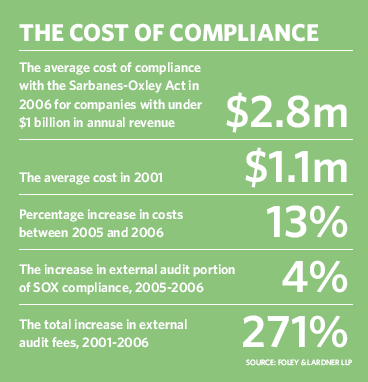
The economic consequences of the introduction of the act such as increased compliance cost (Eldridge et al 2004), de-registration and re-privatization of listed US companies (Engel et al 2007), increased auditing fees, loss of business focus and the increased political and regulatory implications has exposed the Act to large criticism and condemnation. Some of these arguments include the existence of markets for corporate takeover and managers (Jensen, 1986). They are stipulated to work by incentivizing the efficacy of corporate governance rules, and facilitate greater accountability of directors to their investors. In addition the market for lemons (Akerlof,1970), assume that the market would punish those corporations that withdraw financial disclosures. Another argument is the classic free-rider problem that ensues due to the availability of a public good (Baumo,1952), this might lead to oversupply of information as consumers do not bear the cost. In addition, the market is viewed as efficient (Fama, 1969) therefore the invisible hand (Smith, 1776) is assumed to ensure that optimal provision of accounting information is attained through supply and demand. Finally, the introduction of the Sarbanes-Oxley act is thought to limit companies from choosing the most representative accounting methods for their operations

Other researches tend to view the act as a necessity, they debunk the possibility of an oversupply of accounting information as free markets historically tend to provide suboptimal information (Beales et al 1988). Furthermore, free-markets tend to support those with resource power at the expense of the vulnerable. The argument that the market is efficient on average ignores the right of those that may lose everything and those vulnerable to fraudulent organizations. Lastly, the Sarbanes-Oxley act enhances uniformity and comparability of accounting information.

The benefits of the Act to individual investors and corporations is difficult to accurately quantify due to their indirect and preventive nature however, studies from Butler/Ribstein (2006) assert that investors could diversify their stock investments, efficiently managing the risk of a few catastrophic corporate failures, whether due to fraud or competition and when each company is required to spend a significant amount of money and resources on SOX compliance, this cost is borne across all publicly traded companies and therefore cannot be diversified away by the investor. A number of senators have expressed that the at SOX was an unnecessary and costly government intrusion into corporate management that places U.S. corporations at a competitive disadvantage with foreign firms, driving businesses out of the United States (Paul & Huckabee , 2005) . It can however be expected that the constant revision of SEC and PCAOB requirements and technological improvement would drive down the compliance cost and the corresponding reduction in cost of equity across the capital market would justify the enactment of the act.

Sunday, May 17, 2015

Evaluating IFRS Plans for Global Standardization

The long-run goal of the IFRS is to standardize accounting practice across the countries of the world. According to IFRS , their objective is "to develop a single set of high quality, understandable, enforceable and globally accepted financial reporting standards based upon clearly articulated principles" (IFRS, 2015). This is based on the one-size fits all principle and rigidity that standardization of accounting practice embodies. Harmonization on the other hand, seeks to set limits on how large the accounting practices between countries may vary in order to accommodate the national influences that shape each nations accounting process.

Harmonization of accounting standards may support a reduction in information asymmetry that international investors typically face, better analyst forecast and coverage (Pae et al 2007), an increase in capital flows, global comparability of financial statements and improved transparency leading to reduced cost of capital globally (Barth et al 2009). However, this does not come without huge implementation costs, rent extraction activities (Hope et al 2006) and loss of diversity in domestic accounting shaped by value dimensions.


The interrelation of the four value dimensions, shapes the differences in culture, religion, business ownership and financing systems that influence the information needs of investors in countries and hence the differences in accounting practices adopted (Deegan, 2000). The four value dimensions considered are power distance (equality vs inequality), gender equality(masculinity vs feminity), uncertainty avoidance (risk adverse or risk loving) and social integration (individuality vs collectivism) (Hosfsede, 1983). This was adopted into accounting research by Gray (1988) into four similar value system's professionalism versus statutory control, uniformity versus flexibility, conservatism versus optimism and secrecy versus transparency. The value dimensions are particularly effective in highlighting why certain accounting methods would be chosen over others in different countries (Ball and Brown, 1968)

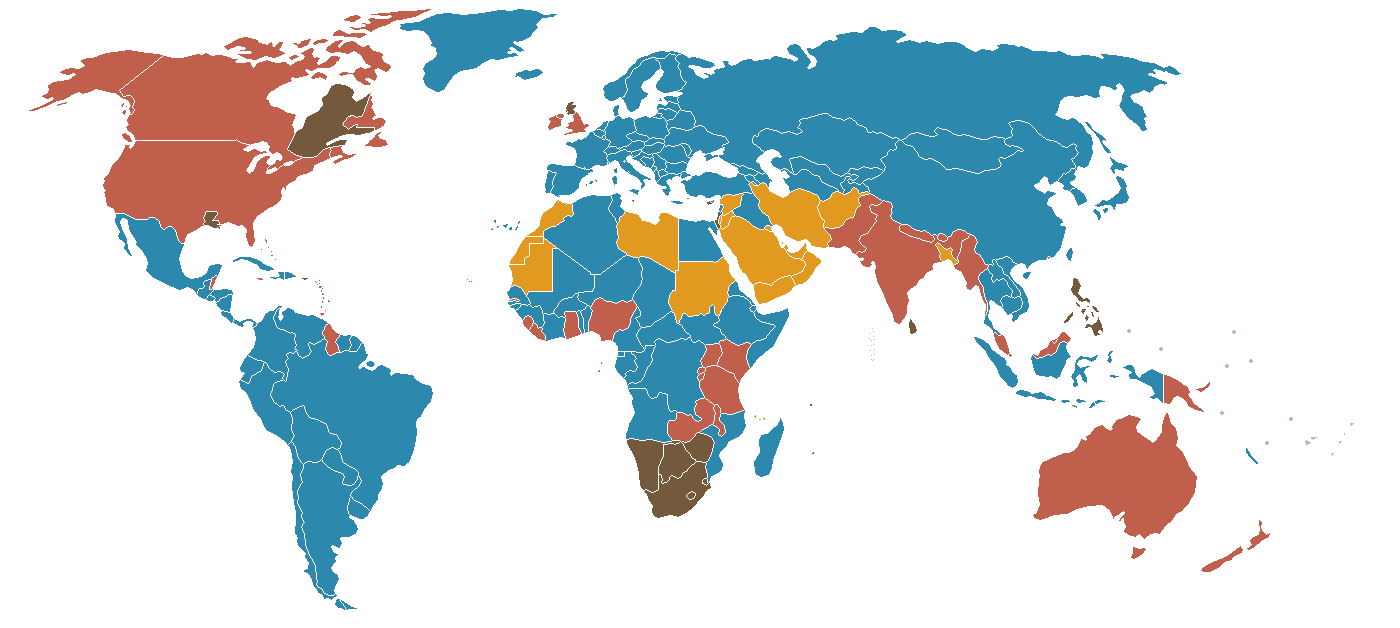
These value dimensions translate into barriers to harmonization. A main barrier to harmonization of accounting standards are the differences in the taxation system between Anglo-American nations and Continental Europe nations, for example, in Germany companies are influenced by the principle of Massgeblichkeit which dictates that taxable income is the main purpose of accounting, meanwhile the United States and the UK have no similar principle this leads to significant differences in accounting for profits (Nobes, 2006). Another main barrier is differences in the political and legal system, countries can be categorized into Roman law countries and Common law countries. Roman law countries (Germany, France) are dominated by accounting practices based on government-run accounting regulations and codified laws while, common law countries (US, UK) emphasize the concepts of "reasonable man" and "true and fair value" with limited amount of government control (Pagell, 1994). Furthermore, differences in economic system affect the possibility of true harmonization, for example the US reporting entities usually become public traded companies in order to raise capital,  whereas German entities, mostly derive funding from banks, family and government, as a result accounting information tends to be of a nature to protect the interest of creditors and differs from US accounting information which tends to protect the interest of institutional and individual investors (Deegan, 2000).


Unlinked to value dimensions, but equally important are the varying implementation and enforcement of the standards that occur across countries that adopt IFRS. The IASB is a standard setter and does not have an enforcement mechanism for its standards. This leads to developing countries such as Nigeria with lax accounting, low liquidity, insider dealings and share price manipulation (Pagell, 1994) adopting IFRS, in name, due to the reputation attached to IFRS while failing to fully implement the standards. This leads to countries with developed accounting standards such as the US GAAP questioning the value of global standardization, such doubts are further compounded by the uncertainty of IASB's future financial stability.


IFRS must first adopt the appearance of harmonization before the transition to reach global standardization of accounting practices.The possibility of international harmonization is constrained on the standards set being flexible and favorable to those regulated, however this reduces the possiblity of realizing the benefits of harmanization. For example, IFRS 7 designed to improve the transparency of off balance sheet securitisations and similar transfer transaction (IFRS, 2015) has proved to be quite lax in enhancing comparability between firms that employ window dressing and offsetting of derivative contract tactics to those that do not. Given the highly political nature of IFRS and the private economic interest of western countries in play,  adopters should be skeptical about the promises of high quality standards under the IFRS conceptual framework.